Op Jezelf
Getting teens ready to live on their own.
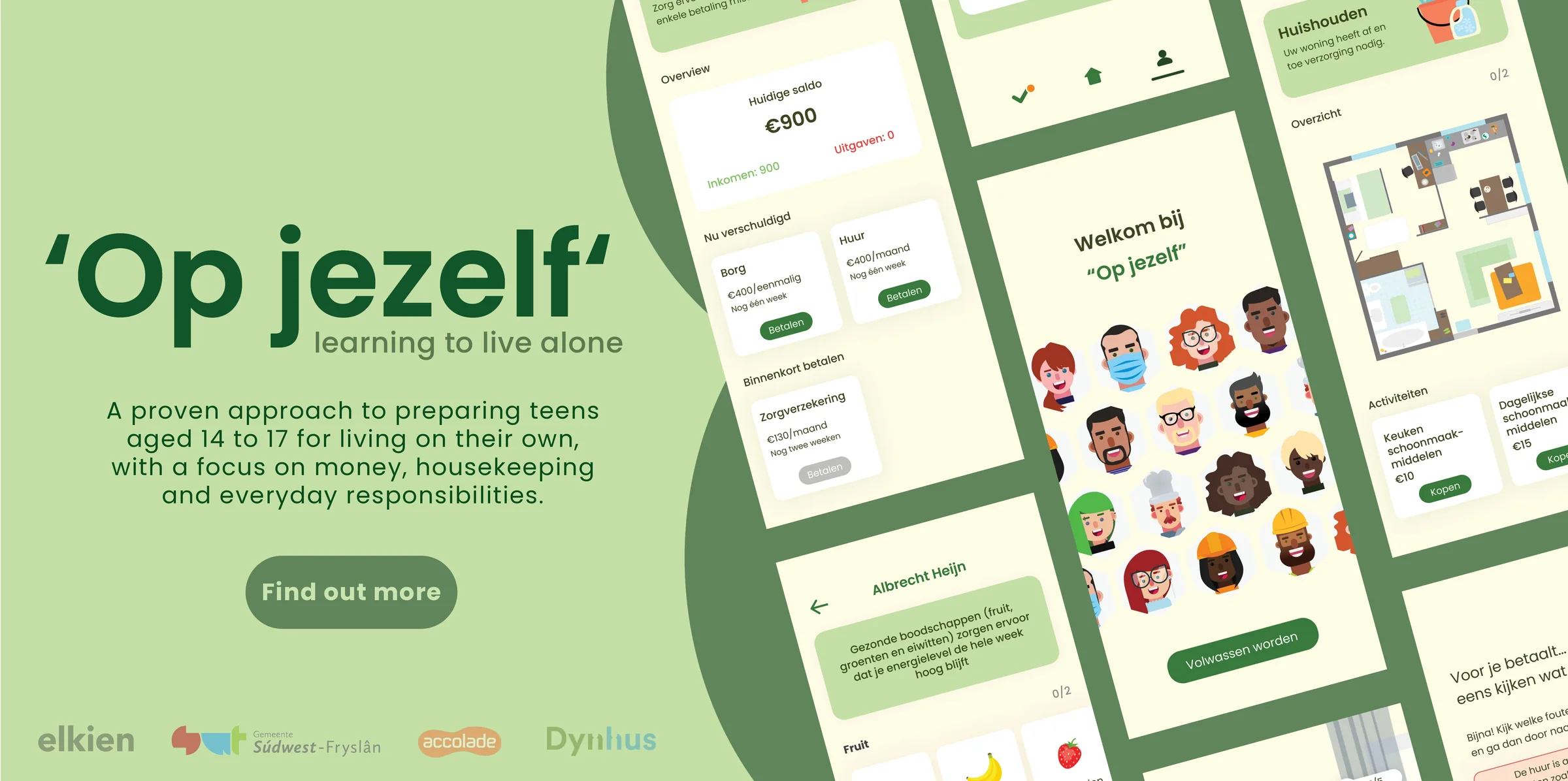
A gamified app for teenagers in Friesland aged 14 to 17, building the practical and emotional skills for independent living, from budgeting and chores to the anxiety of growing up.
Research showed the money problem was really an anxiety problem. So instead of more information, teens got a safe place to practise: real costs with zero risk, small wins and stories from peers.
- My role
- Lead researcher, team lead, illustrator
- Team
- 4 people: a programmer, two designers and me
- Discipline
- UX research & illustration
- Year
- 2025-2026
01 Context
Many teenagers in Friesland lack practical preparation for living on their own. They underestimate real costs, feel overwhelmed by chores and routines, and are anxious about growing up.
The brief, through NHL Stenden, asked for a concept, visual design and working prototype in seven weeks. After delivery, we were hired for five more months to build the full version.
The wicked part: We made adulting feel like
a game, not a lecture.
02 Research
Financial literacy and emotional readiness turned out to be tangled together, so one method would have missed half the picture. As lead researcher I combined interviews, a seven-day diary study, a quiz, card sorting, co-creation and desk research.
- 10in-depth interviews
- 7day diary study
- 9/10asked for budgeting tools
What teens told us, in short
Rent, furniture, bills: it adds up fast and nobody tells you.
One of six themes from 10 interviews and a diary study. My summary, not a quote.
03 Design decisions
Based on the research, I made the design decisions together with our two designers, and guided the type and colour as team lead.
A. Real costs, zero risk. The budgeting feature uses real expenses like rent, utilities and insurance, so teens can practise planning without real consequences.
B. Micro-tasks, not a to-do list. A full list of adult chores causes paralysis. Small daily tasks with visible progress keep motivation going.
C. Peer stories over lectures. Because anxiety kept coming up, the app leans on relatable stories and humour instead of instructions.
04 What testing changed
We tested the Figma prototype with 14 to 17 year olds in usability sessions and a classroom pilot. Teens got lost in the guidance, missed next steps, and asked how to manage expenses without any income.
That led to clearer onboarding, a tighter task structure and more honest feedback in the decision flow.
05 Reflection
Good research isn't just finding what people need. It's understanding the feeling those needs live in.
What worked: putting research straight into design, relatable scenarios, and humour to take the edge off. Next time: test with a bigger, more diverse group of teens.
The full version launched in March 2026. It's used in the Op Jezelf guest lessons that the Frisian housing corporations Elkien, Dynhus and Accolade give in secondary and MBO schools, with a presentation we made for the teacher to use alongside the app. The project has finished since, so I don't have usage numbers to share.
The app is in Dutch. The screens in the phone loops are translated for this portfolio.